Cleaning Cotswold Stone and Stonesfield Slate Roofs in Oxford
If you have started looking into roof cleaning Oxford homeowners can trust with a genuine stone roof, you already know this city is different from most. Long stretches of Oxford are covered not in ordinary concrete tiles but in Cotswold stone slates and, on some of the oldest cottages and college outbuildings, in true Stonesfield slate, a limestone quarried a few miles north west of the city. These roofs are handsome, historic and unusually easy to damage if the wrong cleaning method is used. This guide explains what makes stone roofs in Oxford different, why moss and algae take hold so readily on them, and how a careful, low pressure clean can be carried out without harming the tiles beneath.
The quick answer: Cotswold stone and Stonesfield slate roofs in Oxford should only ever be cleaned using soft washing, a low pressure method that lifts moss, algae and lichen with biodegradable treatments rather than blasting the porous stone with a jet washer, which can crack, lift or strip the surface of these older tiles.
1. Why Roof Cleaning Oxford Homes Need Is Not One Size Fits All
Walk from Jericho to Grandpont, or from Summertown out towards Wolvercote, and the roofline changes constantly. Victorian terraces built with Welsh slate sit close to older stone cottages roofed in local limestone, and a good roof cleaning service has to recognise the difference before touching a single tile. Cotswold stone slates and Stonesfield slate are both forms of limestone, quarried rather than split from true metamorphic slate, and they behave very differently under pressure and moisture.
A stone roof that looks tired and green is not necessarily failing. In most cases it simply needs the build up of organic growth removed so the stone can breathe and shed water properly again. Getting this right protects the character of the building as well as its weatherproofing, which matters enormously in a city where so many streets sit inside a conservation area.
2. What Makes Cotswold Stone and Stonesfield Slate Different From Ordinary Tiles
Cotswold stone slates are cut from local oolitic limestone, the same warm honey coloured rock seen in the walls of many Oxford colleges and villages across Oxfordshire. Stonesfield slate is a specific and rarer variant, quarried at Stonesfield in west Oxfordshire from thin bands of fissile limestone within the wider limestone formation. Historically the stone was dug in winter and left out so that frost could split it along its natural bedding planes into thin roofing slates, a laborious process that made genuine Stonesfield slate scarce even in its own time.
Commercial quarrying of Stonesfield slate effectively ended in the early twentieth century, so any roof still covered in the original material is now working with a finite, largely irreplaceable resource. That single fact should guide every decision about how the roof is cleaned. Reclaimed and salvaged stone slates are sometimes used for repairs, but new supply is extremely limited, which is why conservation officers and heritage bodies take such a close interest in how these roofs are maintained.
Both types of stone are more porous and softer than modern concrete or clay tiles. They absorb water, which is exactly why moss, algae and lichen find them such a welcoming surface, and why aggressive cleaning methods can do real damage that is not always visible until months later.
3. Why Moss and Algae Establish So Easily on Stone Roofs
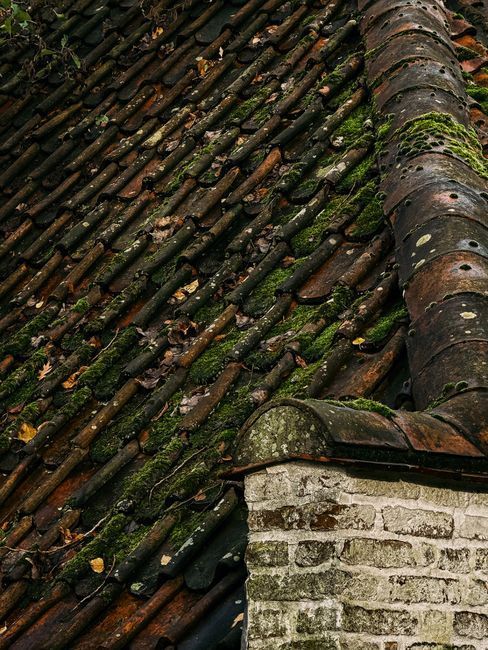
Moss needs three things to thrive: moisture, shade and a rough surface to grip onto. Stone slate roofs tick every box. The slightly uneven, porous surface of limestone gives spores somewhere to lodge, and the north facing pitches common on many Oxford terraces and cottages stay damp for long periods, especially under overhanging trees in areas like North Oxford and Wolvercote.
Oxford's own climate record adds to the picture. The Radcliffe Meteorological Station, based at the Radcliffe Observatory in the city and run by the University of Oxford, holds one of the longest continuous weather records in the world, with observations stretching back to 1767. Its long term data shows Oxford receiving a steady spread of rain through the year rather than sharp seasonal extremes, which is exactly the kind of consistent, low level dampness that allows moss and algae to establish and spread across a stone roof over several seasons.
Left unchecked, moss cushions hold moisture directly against the stone. In freezing weather that trapped water expands, which can force apart the fine bedding planes that give stone slate its structure. This is one of the main reasons a periodic, gentle clean is not just cosmetic, it is protective.
4. Why Pressure Washing Is the Wrong Tool for Stone Slate
A jet washer is designed to blast dirt off hard, dense, non porous surfaces such as paving or brick. Point one at a Cotswold stone or Stonesfield slate roof and the same force that strips a patio can strip the weathered surface layer off the tile, force water beneath the slates and dislodge fixings that may already be a century old.
Once that protective surface patina is gone, the newly exposed stone underneath is rougher and more porous than the surface it replaced, meaning moss and algae often return faster and thicker than before. High pressure water can also drive moisture into the roof structure itself, encouraging rot in timber battens that were never designed to get wet.
For roofs inside Oxford's conservation areas, this is not only a maintenance issue but potentially a heritage one. Damaging historic roofing material on a listed or locally significant building can draw the attention of planning conservation officers, so a cautious approach protects the owner as much as the roof.
5. How Soft Washing Protects Stone Tiled Roofs
Soft washing uses low pressure water combined with a biodegradable cleaning solution that is left to work on the moss, algae and lichen rather than relying on brute force to remove it. The solution breaks down the root structure of the growth, which is then rinsed away gently, tile by tile, without disturbing the surface of the stone or lifting slates that may already be fragile with age.
This method is slower than pressure washing, and that is precisely the point. Each section of roof can be assessed as the clean progresses, so any loose or cracked slate is spotted before it becomes a bigger problem rather than after a jet wash has already made things worse. For a full breakdown of how growth establishes itself on Oxford roofs in the first place, our article on why Oxford roofs turn green looks at the role the city's rivers and low lying setting play.
6. Conservation Areas and Why Care Matters Even More Here
Large parts of Oxford sit within designated conservation areas, and North Oxford in particular is covered by the North Oxford Victorian Suburb Conservation Area, recognised by Oxford City Council for its distinctive Victorian architecture built from the 1860s onward, much of it using stone dressings and slate roofs. Streets around Norham Manor and Park Town are typical examples, where roofline and materials are considered part of what gives the area its character.
In a conservation area, the visual integrity of a roof, its colour, texture and the way moss or staining reads from the street, is treated as part of the historic streetscape. Owners of Victorian and older stone roofed properties in these areas often want a clean that restores the roof's appearance without introducing anything abrasive that could alter the stone. Our guide to caring for period roofs in North Oxford's Victorian conservation areas goes into more detail on this for anyone in one of these streets.
7. Signs a Stone Roof in Oxford Needs Attention
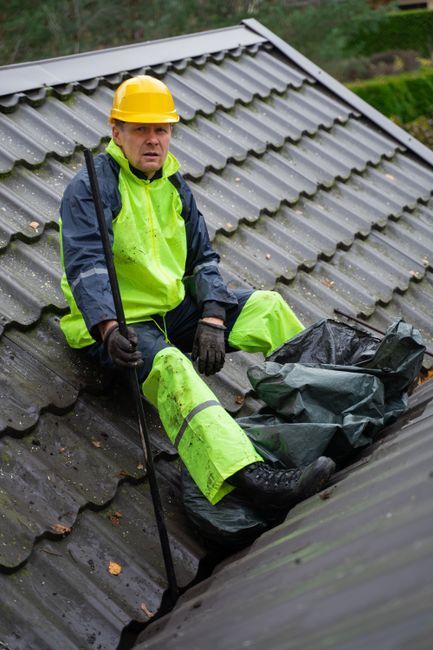
- Green or black staining spreading across north facing pitches , usually algae rather than moss, and often the first visible sign of a roof that has gone too long without a clean.
- Moss cushions building up around ridge tiles and valleys , where water naturally collects and lingers longest after rain.
- Clumps of moss or debris appearing in gutters , which usually means growth on the roof itself has reached the point of shedding material.
- Slipped, cracked or loose stone slates , which can be a sign that trapped moisture has already begun to affect the fixings or the stone itself.
- A noticeably damp or musty smell in an attic space , which can indicate moisture is passing through a roof that is holding more water than it should.
8. How Often Stone Roofs in Oxford Should Be Cleaned
There is no single fixed schedule that suits every roof, because so much depends on aspect, tree cover and how sheltered the property is. As a general guide, a stone slate roof in a shaded, tree lined Oxford street may need attention every two to three years, while a more exposed, sunnier roof elsewhere in the city might comfortably go four or five years between cleans.
Regular light maintenance is always preferable to leaving a roof until growth is heavy. A roof that is cleaned before moss becomes established is quicker and gentler to treat than one where cushions of growth have to be carefully worked loose, tile by tile, which takes longer and demands more caution around older, more fragile stone.
9. Choosing Someone to Clean a Stone Slate Roof
Not every roof cleaning company is set up to work on Cotswold stone or Stonesfield slate. Anyone quoting for the job should be asked directly whether they use soft washing as standard, how they handle roofs with existing loose or cracked tiles, and what precautions they take on conservation area properties. A contractor who cannot answer these questions clearly is not the right choice for a roof this irreplaceable.
With over 15 years of experience working across Oxford and Oxfordshire, Ben's Roof Cleaning approaches every stone slate roof with the same principle: assess first, clean gently, and never use more force than the tile can safely take.
Frequently Asked Questions
Is it safe to pressure wash a Cotswold stone roof? No. Pressure washing can strip the surface of soft, porous limestone tiles and force water beneath the slates, so soft washing at low pressure is the recommended method for stone roofs in Oxford.
How much does roof cleaning in Oxford typically cost? Costs vary depending on roof size, pitch, access and how much growth has built up, so general market prices for a full roof clean can range fairly widely. It is best to get a site specific quote rather than rely on a generic figure, since a stone slate roof often needs more careful, time consuming handling than a standard tiled roof.
Can Stonesfield slate be replaced if it is damaged during cleaning? Genuine Stonesfield slate is scarce, since commercial quarrying largely ended in the early twentieth century, so damaged original tiles can be difficult and expensive to match. This is exactly why gentle cleaning methods matter so much on these roofs.
Will cleaning my stone roof affect its conservation area status? A sympathetic soft wash that removes moss and staining without altering the tile surface should not create any conservation concerns. Issues generally arise from abrasive methods, not from careful cleaning itself.
How long does a soft wash on a stone slate roof take? It depends on the size and condition of the roof, but stone slate generally takes longer than a standard tiled roof because each section needs to be assessed as the clean progresses, particularly around ridges, valleys and any areas with loose tiles.
Does moss actually damage a stone roof, or is it just cosmetic? Moss holds moisture directly against the stone, and in cold weather that trapped water can freeze and expand, which over time can affect the bedding planes that give stone slate its strength. It is more than a cosmetic issue.
Have a Cotswold stone or Stonesfield slate roof that needs attention? Ben's Roof Cleaning has over 15 years of experience cleaning period and stone roofs across Oxford and Oxfordshire, using soft washing methods suited to older, more delicate tiles. Get in touch or call 0186 550 9593 for a free, no obligation quote.
Stone Roofs Reward Patience and the Right Method
A Cotswold stone or Stonesfield slate roof is one of the most distinctive features a property in Oxford can have, and it deserves a cleaning approach that matches its history. Soft washing, careful inspection and realistic timing between cleans will keep these roofs performing well and looking the part for decades to come, protecting a resource that, in the case of genuine Stonesfield slate, simply cannot be replaced once it is gone.