What Is Biocide Treatment for Roofs?
Roof cleaning gets the attention because the change it makes is immediate and visible. The biocide treatment that often follows it is quieter and easy to overlook, yet it is frequently what determines how long the clean actually lasts. Without it, a freshly cleaned roof can begin greening again within a year or two; with it, the roof stays clear for considerably longer. Understanding what biocide treatment is helps you see why it matters so much.
This guide explains what roof biocide treatment is, how it fits alongside cleaning, and what a non-toxic biocide does to keep a roof clear.
Biocide Treatment Defined
A biocide is a treatment designed to kill and inhibit the organic growth that colonises a roof: moss, algae, and lichen. Applied to the tiles after cleaning, it works into the surface and kills remaining and returning growth, while making the surface less welcoming to new spores over the following months.
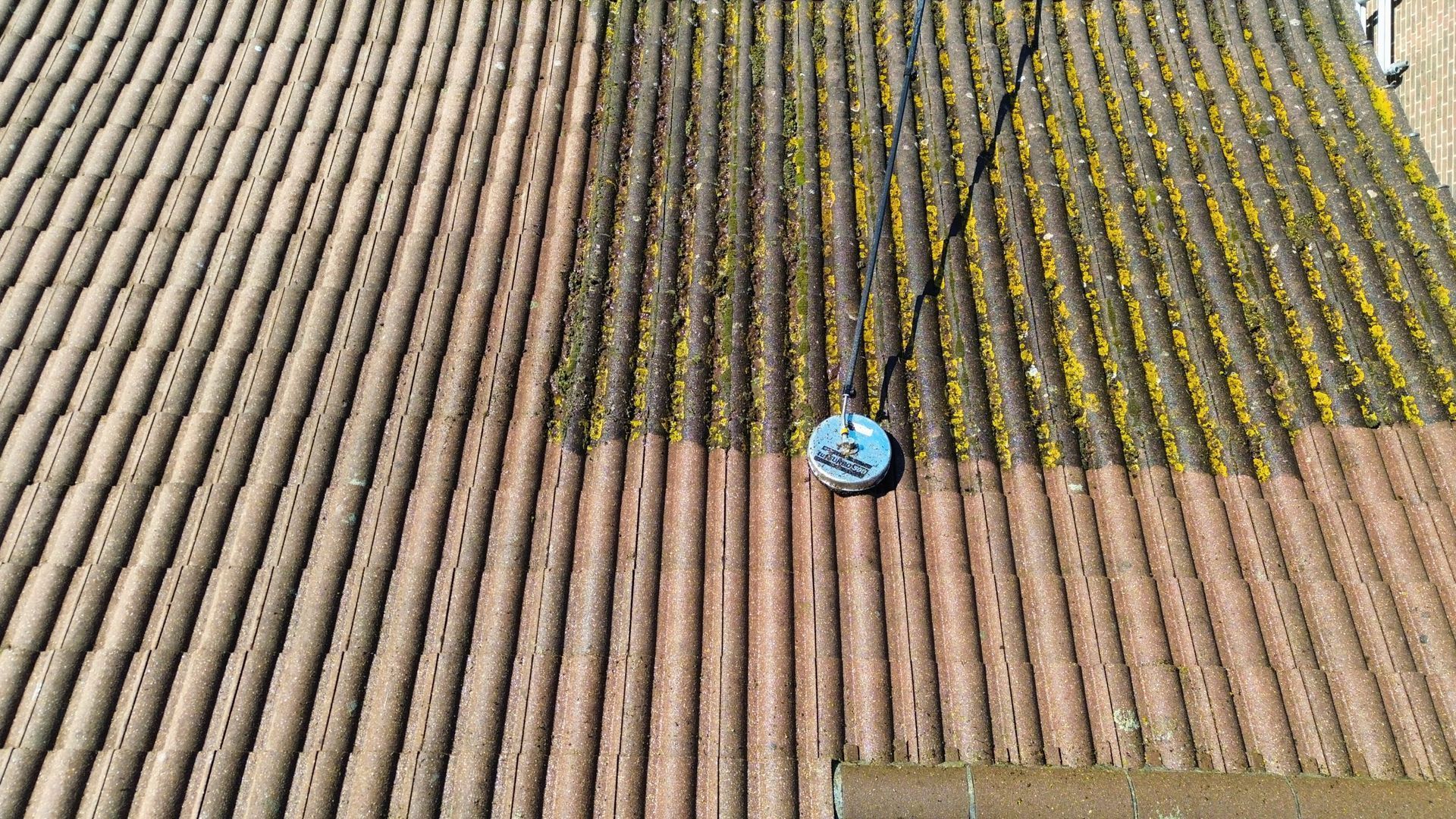
The important thing to grasp is that biocide is a preventative and finishing step, not the main cleaning method. The bulk of the moss and algae is removed first by a gentle, no-contact clean; the biocide then deals with what remains and protects against the return. It is the difference between a roof that is clean today and a roof that stays clean, which is why the two steps work best together.
How It Fits With Cleaning
A typical thorough roof clean has two connected parts. First, the growth is removed using gentle, water-based, no-contact methods that lift moss, algae, and lichen from the tiles without damaging the surface. Second, once the roof is cleared, the biocide is applied to slow regrowth.
This order matters. Cleaning first removes the visible bulk and reveals the tile surface; the biocide then works on that cleaned surface, continuing to kill residual growth and inhibit new spores for months. Applied together, cleaning and biocide give both an immediate result and lasting protection. A Roof Cleaning that includes biocide aftercare is built to deliver both, rather than a quick clean that soon needs redoing.
What Non-Toxic Means Here
The word biocide can sound harsh, so it is worth being clear about what a responsible one is. A non-toxic biocide used in roof cleaning is chosen to be safe around landscaping, pets, and property, and applied carefully to avoid runoff onto plants. It is a targeted treatment that slows organic growth on the roof, not an aggressive chemical that damages tiles or scorches gardens.
This distinguishes it sharply from the harsh chemicals and homemade bleach mixes that careful cleaners avoid. Those can damage tiles, harm plants, and run into drains. A non-toxic biocide is formulated to do its job on the roof gradually and safely, which is exactly why it is the treatment of choice rather than something stronger.
Tip: When booking a roof clean, ask whether a biocide treatment is included and what it is. A clear answer describing a non-toxic biocide applied after cleaning to slow regrowth is a sign of a thorough, lasting approach. A clean with no aftercare treatment may look identical on the day but often greens up again far sooner.
Why Biocide Makes the Clean Last
The value of biocide is entirely in what happens after the cleaning visit. Cleaning removes the current growth, but it does not change the shade, dampness, and airborne spores that let moss and algae grow in the first place. Without a treatment, new spores simply settle back onto the same damp tiles and the cycle begins again.
The biocide breaks that cycle by keeping working on the surface for months, killing returning growth before it establishes and making the tiles less hospitable. This is why a cleaned-and-treated roof stays clear far longer than one that is only cleaned. Keeping the roofline clear with
Gutter Cleaning supports the biocide by removing the damp debris that feeds regrowth. In our 15 years on Sussex roofs, the difference between a clean that lasts a season and one that lasts years is almost always the biocide.
Biocide treatment for roofs is a solution applied after cleaning that kills and slows the regrowth of moss, algae, and lichen. It works gradually on the tile surface over months, making it less hospitable to new growth. A non-toxic biocide is chosen to be safe around plants, pets, and property. Cleaning removes what is already there; the biocide is what keeps the roof clearer for longer afterwards.
Frequently Asked Questions
Is biocide treatment necessary, or is cleaning enough?
Cleaning alone removes the current growth but does nothing to slow its return, so a cleaned-only roof can green up again within a year or two. Biocide treatment is what makes the clean last, by killing returning growth and inhibiting new spores for months. For a durable result, the biocide is close to essential, especially on shaded, damp roofs where regrowth is fastest.
Is roof biocide the same as bleach or harsh chemicals?
No. A responsible roof biocide is non-toxic, chosen to be safe around plants, pets, and property, and applied to slow growth gradually. That is quite different from harsh chemicals and homemade bleach mixes, which can damage tiles, scorch gardens, and run into drains. Careful cleaners avoid those aggressive substances and use a targeted, non-toxic biocide instead.
When is the biocide applied?
The biocide is applied after the roof has been cleaned and the growth removed, so it works on a cleared surface. Cleaning first reveals the tiles and takes off the bulk of the moss and algae; the biocide then continues to kill residual growth and inhibit new spores over the following months. The two steps are done together as part of a thorough clean.
Does biocide work on lichen as well as moss?
Yes, and it is especially valuable for lichen. Lichen anchors deep into the tile and often survives the initial clean, regrowing from its anchor points. The biocide keeps breaking down that residual lichen over the following months, which is why it is close to essential for a lasting result against lichen, more so even than for softer moss.
How long does the protection last?
It varies with shade, tree cover, tile type, and climate, but a biocide typically keeps a roof clearer for a good while longer than cleaning alone, often stretching the interval before another clean by a considerable margin. Shaded, damp roofs may benefit from occasional top-ups. A visual check each spring and autumn shows when protection is fading and growth is returning.
Make your roof clean last — Book a no-contact clean finished with a non-toxic biocide to slow moss, algae, and lichen. Ben's Roof Cleaning includes a free inspection and patch test. Call 0186 550 9593.
The Step That Keeps a Roof Clear
Biocide treatment for roofs is the preventative step that turns a one-off clean into a lasting result. Applied after gentle cleaning has removed the bulk of the growth, a non-toxic biocide keeps working on the tile surface for months, killing returning moss, algae, and lichen and making the roof less hospitable to new spores. It is safe around plants and pets, quite unlike the harsh chemicals careful cleaners avoid, and it is often the deciding factor between a roof that greens up again in a season and one that stays clear for years. Cleaning makes the roof clean; the biocide keeps it that way.